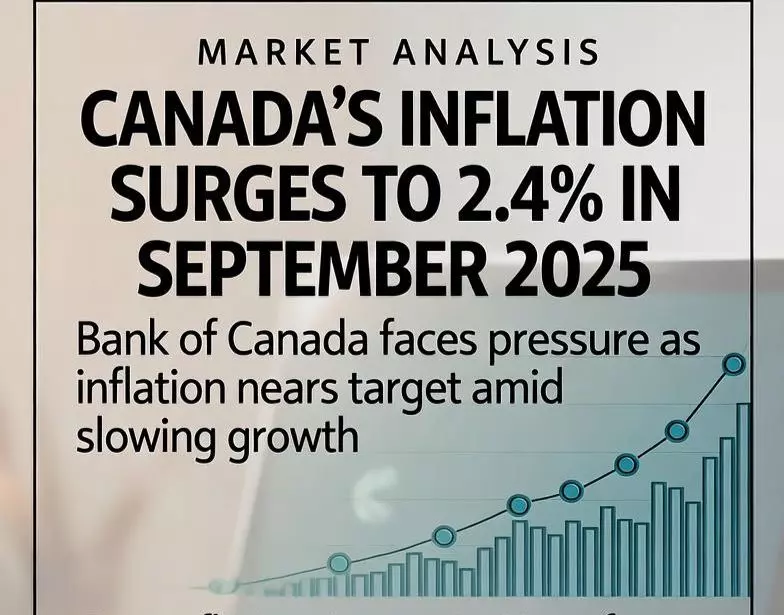
Canada's Inflation Surges to 2.4% in September 2025: Implications for Bank of Canada Rate Cuts and the Housing Market
In the ever-evolving landscape of the Canadian economy, recent inflation figures have sparked significant discussion among economists, policymakers, and real estate professionals.
Key Inflation Data Highlights
The headline inflation rate for September 2025 increased to 2.4%, driven primarily by rises in gas prices, travel costs, rent, tuition, and groceries. Offsetting factors included declines in air transportation, accommodations, clothing, and household appliances. Core inflation measures showed mixed results: the median remained stable, while the trim measure edged up slightly by 0.1%. Despite the uptick, month-over-month core metrics did not indicate aggressive acceleration, potentially allowing room for monetary policy adjustments.
For detailed data, refer to the official Consumer Price Index report from Statistics Canada: Consumer Price Index, September 2025.
Additional coverage includes:
- Canada Inflation Quickens to 2.4%, Core Measures Heat Up from Bloomberg.
- BREAKING: Canada headline CPI rose 2.4% YoY in September from FXStreet.
- Inflation jumps to 2.4% in September thanks to gas, grocery costs from The Star.
Insights from Economic Surveys
The Bank of Canada's conducted third-quarter 2025 surveys, which paint a picture of cautious optimism tempered by economic headwinds:
- Consumer Expectations Survey: Consumers reported slight improvements in financial outlooks but remain below pre-pandemic levels. Labor market perceptions have worsened, with lower job-finding probabilities. Inflation expectations persist, influenced by potential U.S. tariffs.
- Business Outlook Survey: Businesses anticipate subdued price growth and weak sales, with investment plans scaled back due to trade uncertainties. Recession risks are rising, creating an environment of high caution.
These surveys underscore a weakening economy, with GDP projections around 1%—a level historically associated with policy interventions. Access the full reports here:
- Canadian Survey of Consumer Expectations—Third Quarter of 2025.
- Business Outlook Survey—Third Quarter of 2025.
- Related analysis: Bank of Canada's business survey results leave 'ample room to cut' interest rates, economists say from Financial Post.
- The number of Canadian companies expecting a recession is rising, Bank of Canada survey shows from Financial Post.
Bank of Canada Governor's Perspective
Governor Tiff Macklem has emphasized slow growth that "won't feel good," linking it to trade tensions, weak investments, and exports, with historical parallels to 2015-2016, when similar conditions led to rate cuts below 2%. Current indicators suggest the Bank may continue easing unless inflation escalates sharply.
For more from the Governor:
- Canada’s economic outlook and global trade: A conversation with Governor Tiff Macklem.
- BoC Governor Tiff Macklem on Rate Cuts, Tariffs and More | Full Interview.
- Historical context: Bank of Canada plans to keep interest rate near zero until 2023 from CBC.
- Bank of Canada may abandon core inflation as 'preferred' measure, deputy governor says from Financial Post.
Trade policy updates include:
- Carney government quietly dropped more U.S. counter-tariffs than advertised from CBC.
- Mark Carney rejects calls to revive counter-tariffs against U.S., says ‘right now is the time to talk’ from The Star.
Implications for Real Estate and Mortgages
With potential rate cuts on the horizon, homebuyers and investors in the Canadian real estate market could see improved affordability. However, persistent inflation and economic uncertainty may temper optimism as recent home sales reaching four-year highs for September, signaling resilience.
Related: Canadian Home Sales Mark Four-Year High for the Month of September.
For interest rate trends: Interest Rates: Immediate Rates (24 Hours): Prime Rates: Total for Canada from FRED.
We are here to help
Navigating these economic shifts can be challenging for real estate decisions. If you're considering buying, selling, or investing in the current market, contact Adam Vetter for expert guidance tailored to your needs. Schedule a consultation today!
Categories
Recent Posts